

Café · Dallas · ⭐ 9.7/10 · 715 reviews · updated: 2026-08-10 17:39:26
Address: 2650 N Fitzhugh Ave #100, Dallas, TX 75204, United States
In a city that solved coffee with the drive-thru window, a bar that refuses to give you the password is making a point. LDU Coffee To Go has no Wi-Fi, no laptop corner and no interest in acquiring either. Two brothers from Perth opened this East Dallas shop as a deliberately Australian object: a fast, loud, friendly espresso bar where the transaction takes ninety seconds and the conversation is with a human rather than a screen. It was the first of what is now a small local chain, and it is still the one that explains the whole idea.
Highlights
- No Wi-Fi, on purpose. Mark Lowes has put it plainly in the local press: Australians would find it strange to have Wi-Fi in a coffee shop at all. Nobody is going to nurse a flat white here for four hours behind an open laptop.
- Two questions and you’re done. The ordering ritual is stripped to almost nothing — do you want your coffee strong or smooth, and what kind of milk. The staff take it from there.
- The flat white is the default, not the novelty. This is Antipodean espresso culture transplanted whole: small, milk-built drinks made to a house recipe the brothers spent close to a decade refining before they ever crossed the Pacific.
- The beans are roasted in Dallas. When the bar opened, the coffee was a single origin from Mexico roasted for them by White Rock Coffee, a local roastery — a supply arrangement rather than a house roastery, and LDU has never claimed otherwise.
- The original of six. This shop came first, in 2017; the brothers have since opened in University Park, by White Rock Lake, in Preston Hollow, near Lovers and Greenville, and most recently in Uptown.
- Toasties are a real part of the offer. Grilled sandwiches are built to order on bread from a Dallas bakery, and the counter carries pastries and doughnuts from named local partners rather than an anonymous distributor.
What’s in the cup
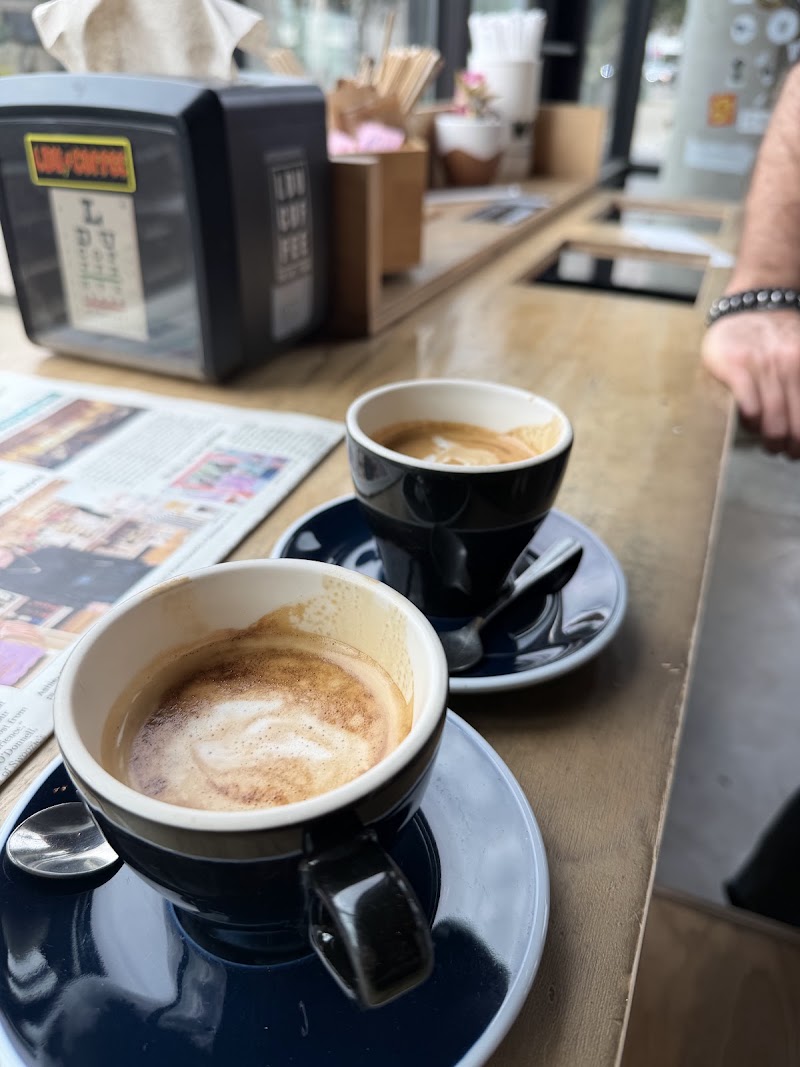
LDU does not roast, and it does not pretend to. The coffee is bought in from a Dallas roastery — White Rock Coffee, working to a single-origin brief rather than a big house blend when the shop first opened — and everything distinctive happens on the LDU side of the counter: the extraction recipe, the milk, the ratio, the speed. Adam Lowes describes the result as a supercharged take on classic Italian espresso, made with American machinery and European influence, and that is a fair summary of what lands in front of you. The shot is short and dense, aimed at sweetness and body rather than the bright, tea-like acidity that filter-led bars chase.
The consequence is that the drinks are milk drinks. A flat white here is the standard order, not something you have to explain, and the smaller, more concentrated Australian formats that sit next to it on the board make sense in the same way: less milk, more coffee, one cup that is finished while it is still hot rather than sipped across an hour. Anyone arriving with a mental map built around pour-over flights, rotating micro-lots and a conversation about fermentation should recalibrate. There is no brew bar theater here. There is one recipe, executed the same way at the first order of the morning and the four hundredth.
That is a genuine position rather than a shortcut. A bar doing this kind of volume, with a queue that moves and an order that is settled in two questions, needs consistency far more than it needs variety, and buying from one roaster it trusts is how consistency is bought. The playful drink names on the board — the ones that sound like superheroes — are the Australian sense of humor showing, not a sign that the coffee is being treated as a novelty.
Who’s behind it
LDU is the work of Mark and Adam Lowes, brothers who ran coffee shops in Perth, Western Australia, before moving to Texas. They spent years testing a house recipe at home and arrived in Dallas to find a market where the Australian style of café — small, quick, espresso-and-milk, with no pretension attached — barely existed. The first LDU opened here in 2017, roughly two years after they landed.
The brothers’ description of what they wanted is unusually modest: a place where they played the music they liked, served the coffee they liked, and spent the working day trying to make the person in front of them feel like a regular. That sounds like standard hospitality copy until you notice how much of the business is built around it — the two-question order, the absence of Wi-Fi, the deliberate speed. The shop is designed so that the staff and the customer actually speak to each other, because there is nothing else to do while the coffee is being made.
Six shops later, the model has held. Expansion in this trade usually softens the original idea; here the additional sites have kept the same short menu logic and the same counter-first format, which is why the first shop still reads as the flagship rather than a museum piece.
Who it’s for
This is the clearest-cut café in the city on the question of what you can do inside it. If you came to work, keep driving. There is no Wi-Fi to log on to, the seating is not built for a session, and the whole rhythm of the room assumes you will be gone within a quarter of an hour. That is not hostility — it is the format doing exactly what it was designed to do.
What it is superb at is the short visit with a purpose. Coffee on the way to an office in Uptown or downtown. A twenty-minute catch-up with someone you actually want to talk to, without the ambient guilt of a table you are occupying. A cup taken outside and drunk standing up while the dog waits. A weekend stop after a run, with a toastie ordered at the same counter. The Australian espresso bar was invented for precisely these visits, and LDU reproduces the pattern faithfully — including the part where the barista recognizes you on the third visit and starts your order before you speak.
It also works well for a solo drop-in when you do not want to be alone with a screen. Because there is nothing to browse and no reason to linger, sitting by yourself with a cup for ten minutes feels normal here in a way it does not in a room full of open laptops. Anyone who needs a power outlet, a quiet corner and three hours should go to a café built for that instead; there are plenty in East Dallas, and the brothers would be the first to send you to one.
The space
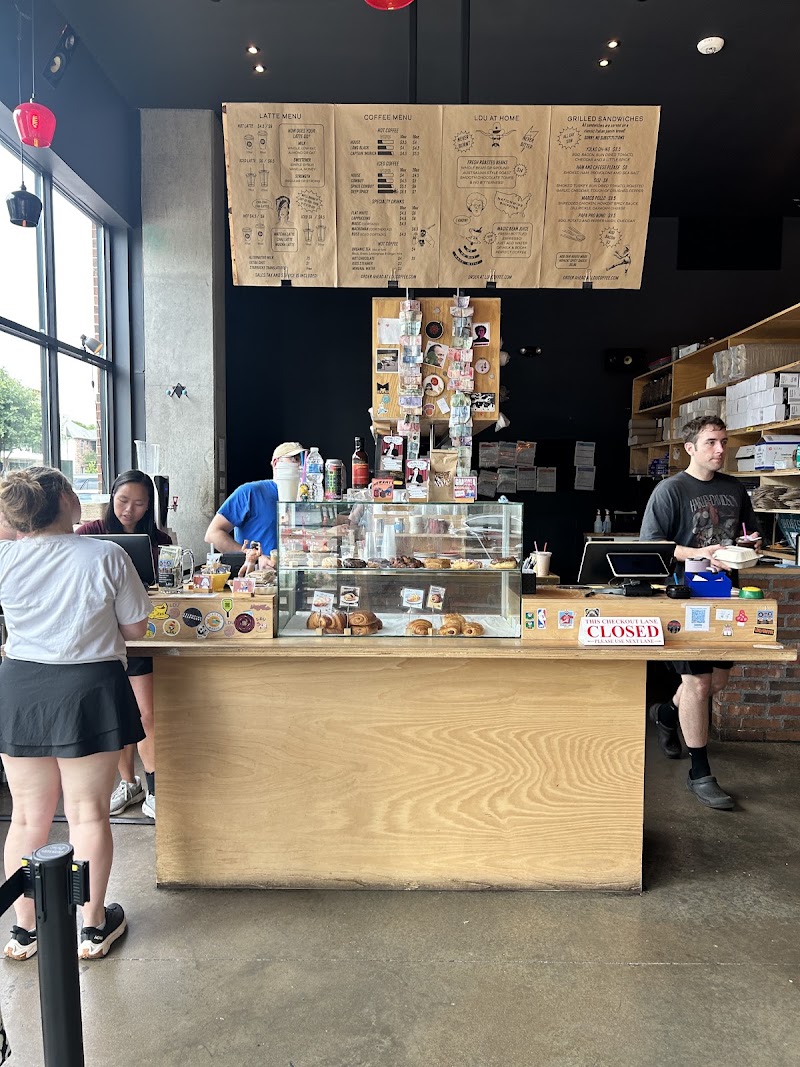
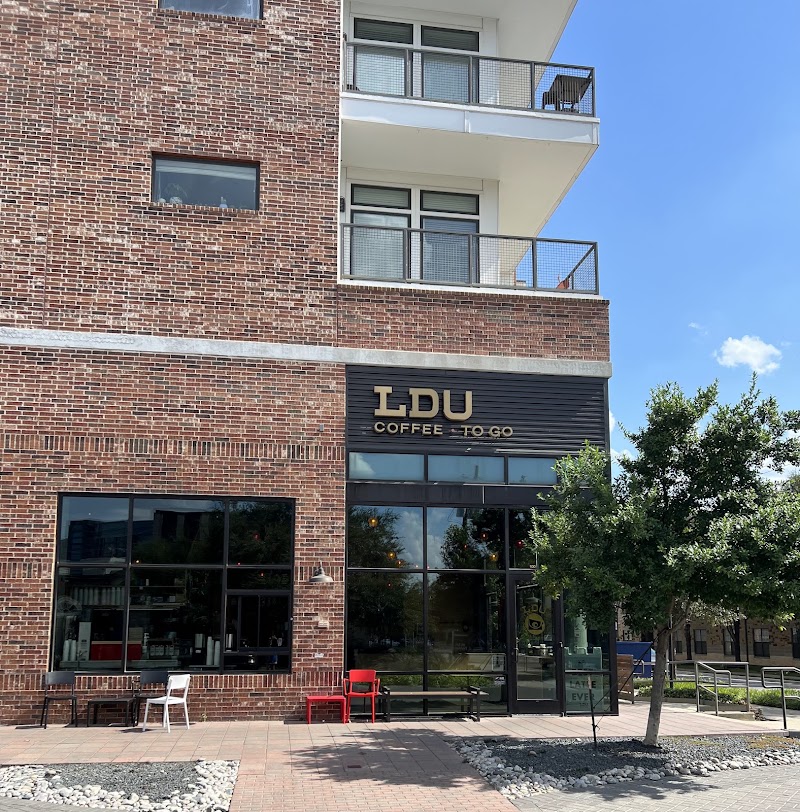
The footprint is small and counter-led, which is the point. The machine dominates, the queue forms in front of it, and the seating is limited to a handful of spots inside and a few outside — enough for a short sit, not enough to plan a meeting around. Music plays at a volume the founders chose deliberately, the grinder and the steam wand punctuate everything, and the room is cheerfully loud at peak rather than library-calm.
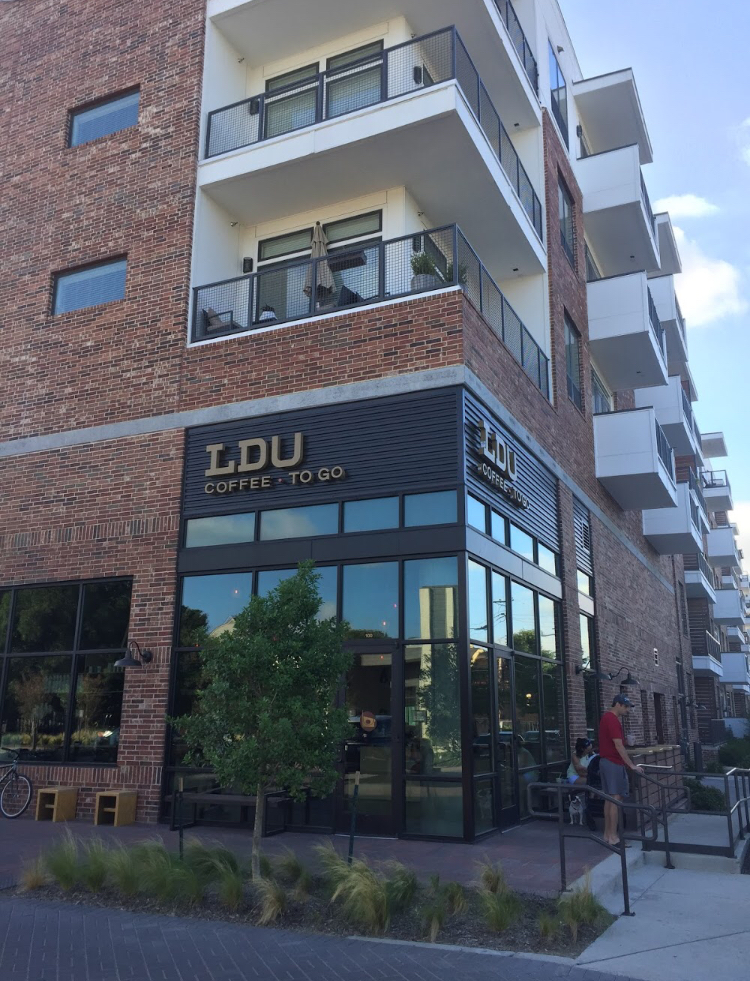
Visually it leans bright and slightly cheeky rather than minimal-Scandinavian: color, Australian references, hand-written signage. It reads as a neighborhood espresso bar in the Italian sense, filtered through Perth. Outdoor seats are the natural place to land if you have a dog with you, and in the mild half of the Texas year they are the better seats anyway.
Be realistic about capacity. At the morning peak the line can reach the door, and there is no waiting lounge to absorb it. The compensation is that the line moves — the two-question order exists precisely so it can.
Beyond coffee
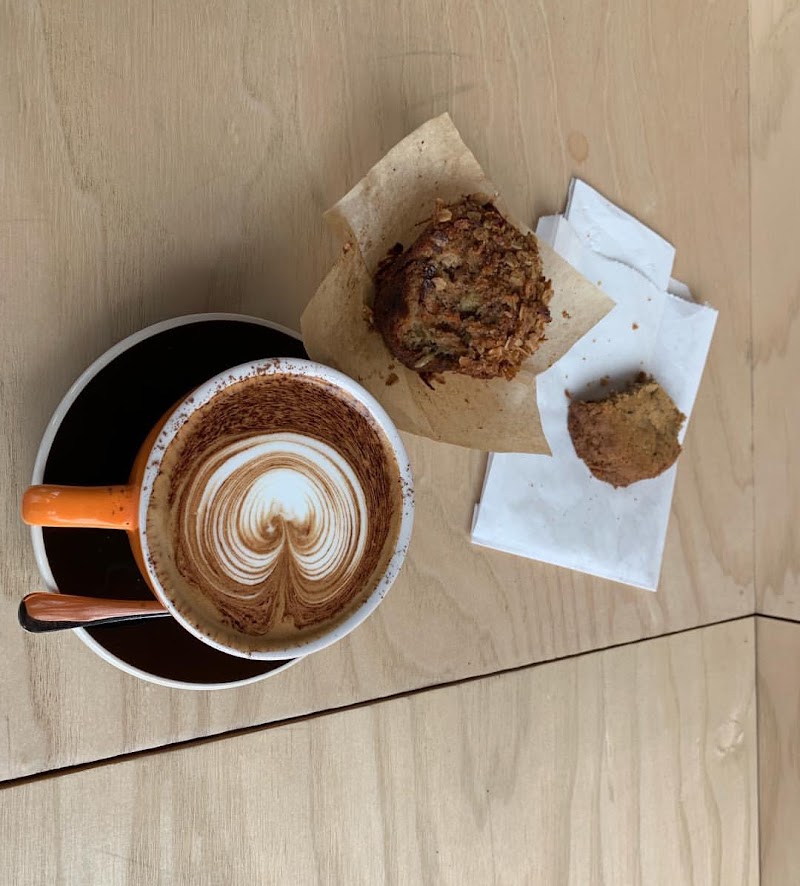
Food here is a genuine second pillar rather than a shelf of packaged afterthoughts. Grilled sandwiches are made to order on bread from a Dallas bakery, and they are substantial enough to work as a proper breakfast or a light lunch rather than a nibble. The counter also carries baked goods from named local partners — a Dallas bakery, a local doughnut maker — which is a meaningful signal: a to-go bar that could easily have taken the cheapest wholesale option instead lists the businesses it buys from.
Toasted banana bread has been on the counter since the early days and functions as the house comfort item. The non-coffee side is covered for anyone who does not want caffeine in a cup with milk, though this is unmistakably an espresso bar rather than a tea house or a juice place. What you will not find is a brunch kitchen: no eggs cooked to order, no plates, no table service. Everything is designed to be handed across a counter and carried.
When to come
The shop opens well before the working day starts and is built for the commuter wave — the pre-office window is the busiest and also the most fun to watch, because the two-question ordering system is doing exactly what it was built for. Mid-morning slows down enough that you can actually talk. Afternoons are the calmest stretch, and the bar closes in the afternoon rather than running into the evening, so this is not a place to plan an after-work meeting around.
Weekends start later and run at a different tempo: more dogs, more running gear, more people who came deliberately rather than on the way to somewhere else. If you want the shop at its most characteristic — fast, noisy, funny — come on a weekday morning. If you want to sit outside and take your time, come at the weekend, and come early enough to get one of the outdoor seats.
Getting there
The shop sits in East Dallas, on the seam where the Knox district and Uptown give way to the neighborhoods around Lower Greenville, in a suite within a small commercial building rather than on a shopfront strip. This is Dallas: you will almost certainly drive. There is parking at the building, but it is finite and the morning peak tests it, so leave yourself the option of the surrounding blocks.
Rail is not the natural approach — the nearest DART station serving this side of the freeway corridor is the Cityplace/Uptown stop, which is a reasonable drive or a hot walk depending on the month, rather than a doorstep connection. Cyclists have it easier: the shop is close enough to the trail network that threads through this part of the city to make it a plausible stop on a ride. If you are coming from downtown or Deep Ellum, it is a short hop north; from Uptown, shorter still.
Good to know
Order ahead if you are on a schedule — the shop takes orders online, and at peak that is the difference between a two-minute stop and a ten-minute one. Bring a card; bring patience for the queue; do not bring a laptop expecting to settle in.
The honest weaknesses are the flip side of the strengths. Seating is scarce, so this fails as a meeting room. The absence of Wi-Fi is absolute, not a soft discouragement. The menu is short by design, which will frustrate anyone who wants a rotating single-origin filter option. And because this is now a six-shop group, the other locations differ in size and setting — a lakeside site and a shopping-district site are not the same experience as this one, even under the same name.
One point of transparency about the coffee itself: the roasting partnership described here is drawn from reporting around the shop’s opening years. Roasting relationships in this trade shift quietly, and LDU has never built its identity on the origin of the bean the way a self-roasting café would. What is stable is the recipe, the speed and the format.
Questions and answers
Does LDU Coffee To Go have Wi-Fi?
No, and not by oversight. The founders take the Australian view that a coffee shop is not an office, and the absence of a network is a stated part of the concept rather than a technical gap.
Can I work here with a laptop?
Realistically, no. There is no network, seating is limited and the room is built for short visits. If a working session is the plan, choose a café designed for it.
Do they roast their own coffee?
No. The beans are roasted by a Dallas roastery and the bar’s craft is in the extraction and the milk. When the shop opened, the coffee reported was a single origin from Mexico roasted by White Rock Coffee.
What should I order the first time?
A flat white. It is the drink the house recipe was built around, and it is the fastest way to understand what the Australian espresso style is actually about. If you want something shorter and stronger, say so at the counter — that is literally one of the two questions they ask.
Is there food, or only coffee?
There is real food: grilled sandwiches made to order on bread from a local bakery, plus baked goods from named Dallas partners. It works as breakfast or a light lunch, but it is counter service, not a brunch restaurant.
Is it suitable with a dog?
The outdoor seats are the natural place to sit with a dog, and in the cooler months they are the best seats in any case. Inside is tight, so plan on the patio side.
Do I need to drive?
Almost certainly. This is a car-first part of Dallas; there is parking at the building, though it is limited at the morning peak. Rail gets you into the general area but not to the door.
Is this the only LDU?
No — it is the first of six around Dallas, including sites in University Park, near White Rock Lake, in Preston Hollow, near Lovers and Greenville, and in Uptown. This one is the original and the clearest expression of the format.
How long should I plan to stay?
Ten to twenty minutes. Longer than that and you are working against the design of the place; shorter and you have missed the conversation, which is half of what you came for.
Opening hours
| Day | Hours |
|---|---|
| Monday | 06:45–16:00 |
| Tuesday | 06:45–16:00 |
| Wednesday | 06:45–16:00 |
| Thursday | 06:45–16:00 |
| Friday | 06:45–16:00 |
| Saturday | 07:00–16:00 |
| Sunday | 08:00–15:00 |
Photos
Visitor reviews
Reviews last updated: 2026-08-10 17:39:26
Data is refreshed monthly. Sources: dallaska.com and editorial picks based on reviews.
LDU Coffee To Go пропонує швидкий, зручний та приємний кавовий досвід, розроблений для людей, які завжди в русі, але все ще цінують якісну каву. З моменту наближення клієнтів установка відчувається ефективною, сучасною т…
Ми вже спробували кілька видів кави та сендвічів у LDU і були дуже вражені. Нам подобається їхній ванільний лате, а також лате з медом та корицею з вівсяним молоком. Сендвіч "Жовток О, О, Ні" – один з моїх улюблених сенд…
У кав'ярні справді мила атмосфера, а матча була гідною. Єдиним моїм розчаруванням було відсутність Wi-Fi, через що мені важко залишатися й виконувати будь-яку роботу. Було б чудово, якби вони запропонували це в майбутньо…
Мені справді подобається LDU, але це смішно. Замовив каву Long Black об'ємом 16 унцій і пояснив, що не хочу ні для чого іншого місця. Коли виміряли, виходить менше ніж 12 унцій. Навіщо вони взагалі пропонують 16 унцій, я…
Я знайшов це місце і швидко закохався в нього. Однак одного разу я зайшов замовити свій звичайний напій, а коли повертався на роботу, помітив, що мені дали не той напій. Я також помітив, що мені значно не вистачило напою…