

Café · Dallas · ⭐ 9.9/10 · 537 reviews · updated: 2026-08-10 17:39:29
Address: 1810 S Akard St Unit 100, Dallas, TX 75215, United States
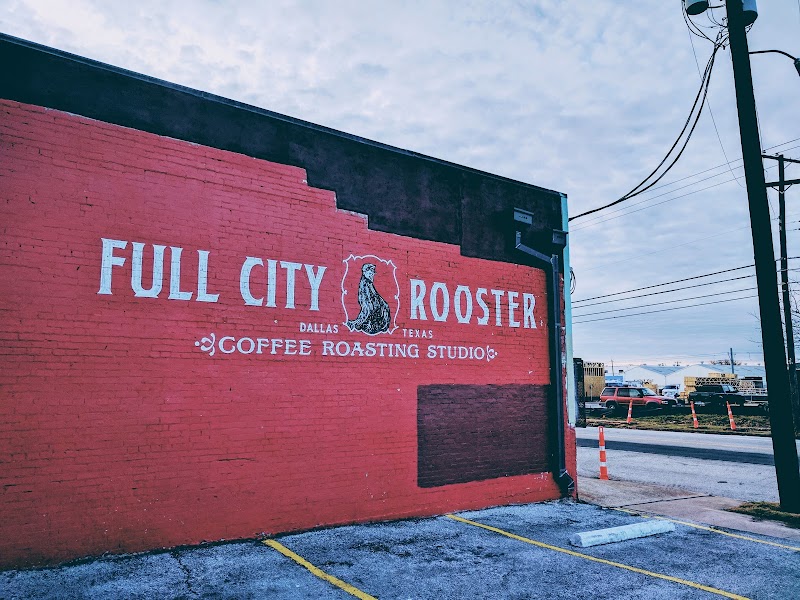
The name is a typo that nobody bothered to fix. Full City Rooster should have been a roaster, but the word came back misspelled on the first batch of shirts and business cards, and the founder decided he liked the bird better. That is a fair summary of how the whole place operates: a small, stubborn, husband-and-wife roasting studio in an old electric shop south of downtown Dallas, doing single-origin coffee exactly the way it wants to and letting the city catch up in its own time.
Highlights
- A working roastery, not a café that buys beans — the roasting happens in the same room you drink in, which is still rare in this city and completely changes what the counter can tell you.
- Single origin only. No house blend to hide behind, and origins that most American roasters never touch — Yemen among them, alongside Latin America.
- The name comes from two accidents — “full city” is a roast level, and the rooster arrived via a printer’s error that the owner kept.
- Every batch profiled by hand on a modern roaster whose automation the owner deliberately overrides, on the grounds that he trusts twenty-five years of his own judgment more than the software.
- No syrups, no novelty drinks — the list is short and purist, and that is a statement of intent rather than a limitation of the equipment.
- A back patio and a performance area, plus local art and photography on the walls and an annual partnership with the Cedars arts community.
What’s in the cup
This is the section that most cafés cannot fill honestly and that this one exists for. Full City Rooster roasts everything it serves, in small batches, on a modern roasting machine — the kind with sophisticated automated profiling built in, which the owner routinely turns off. His stated reasoning is not romantic: after more than twenty-five years working with espresso he trusts his own eyes and nose on a given batch more than he trusts a curve someone else programmed. Whether or not you accept that argument, the result is that no two roasts here are automated copies of each other.
The sourcing policy is the second half of the identity: single origin only, with no house blend on offer. That is a harder way to run a coffee bar than it sounds, because a blend exists precisely to smooth out the differences between lots and keep the espresso predictable — abolishing it means the bar tastes different as the coffees change, and the counter has to explain that to every new customer. The origins have included Mexico, Guatemala and Panama, which is normal enough, and Yemen, which is not: Yemeni coffee is scarce, expensive to buy and complicated to import, and a small Dallas roastery choosing to work with it is a genuine statement. Unusual Asian origins have appeared here too, years before that became fashionable in the United States.
The drinks list is deliberately, almost provocatively short. Espresso and the classic milk drinks, filter coffee brewed by hand, and cold brew — and nothing with syrup in it. There is no caramel anything. That will annoy some visitors and delight others, and the shop is entirely unapologetic about which of the two it is trying to serve. The name itself points at the house style: “full city” is a roasting term for a medium roast taken to the edge of the second crack, sweet and full rather than either grassy or burnt.
Who’s behind it
Michael and Chris Wyatt, husband and wife, opened Full City Rooster in 2013 in a converted electric shop in the Cedars. The way they started tells you most of what you need to know: for a long stretch the place was appointment only. You could not simply walk in for a coffee — you arranged to come, and Michael roasted and poured for whoever had made the effort. The café and its opening hours grew only as the obsessives kept turning up and kept coming back.
That is the opposite of the standard playbook, in which a coffee business opens as wide as possible and hopes volume finds it. It also explains why the shop feels like someone’s workshop rather than a hospitality product: the retail side grew out of the roasting side rather than being designed on top of it. More than a decade in, the Wyatts have become fixtures of their neighborhood’s arts scene as well as its coffee scene, hosting events and working with the local open-studios organization that runs the Cedars’ annual art weekend.
What it’s good for
Drinking coffee attentively. This is the primary scenario and it is unusually well served. If you actually want to taste what a particular farm’s coffee does, ask what is on, and get an answer from someone who roasted it — this is the address. Sitting at the counter with a filter coffee and a conversation about the current lot is the intended experience, and nobody here will make you feel like a nuisance for asking.
Buying beans. Arguably the strongest reason to make the trip. Coffee bought at the roastery that roasted it is fresher than coffee bought anywhere else by definition, and the staff can tell you when a given bag came off the drum. If you are equipping a home setup, this is a supply line rather than a purchase.
Sitting outside. The back patio is one of the pleasant surprises of the place, and in a neighborhood of warehouses and studios it is a genuinely calm spot to spend an hour.
Talking to somebody. Very good. The room is small enough to be quiet, the crowd is not a hurried commuter crowd, and the short daily window means nobody is trying to turn tables late into the day.
Working with a laptop. Handle with realism. There is proper café seating now, but this remains a compact roasting studio with a notably short day, and it publishes nothing about Wi-Fi or power outlets. It is a fine place to read or to do an hour of focused work; it is not a co-working room, and treating it as one rather misses what the counter is for. Come charged and plan around a visit rather than a shift.
Coming for an event. The studio has a performance area and hosts comedy, pop-ups and cultural nights, which is a side of the business you will only find by checking what is scheduled.
The room
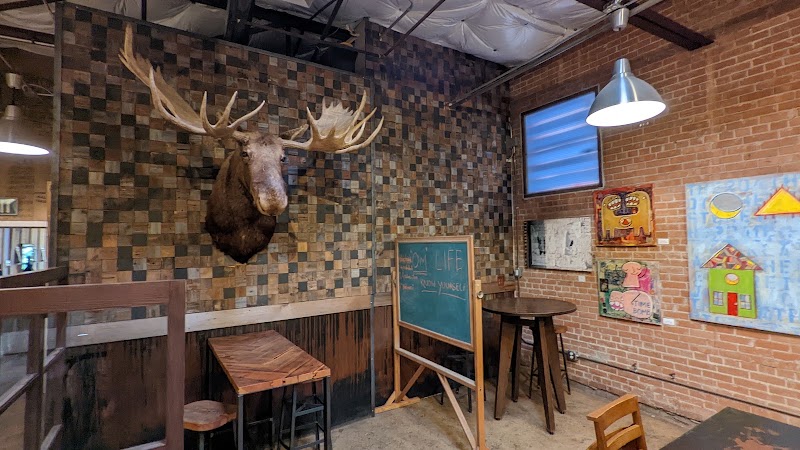
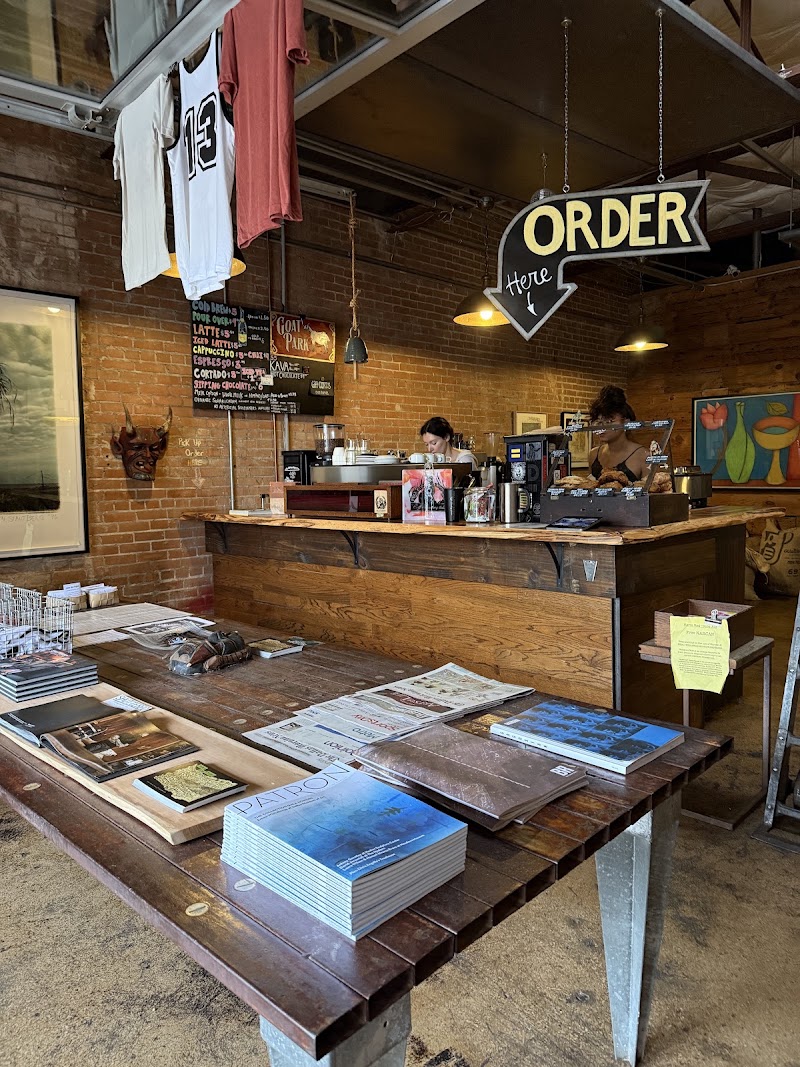
The building was an electric shop before the Wyatts took it, and the conversion has not tried to erase that. This is a working industrial space in a district of warehouses, artists’ studios and loft conversions immediately south of downtown: concrete, machinery, sacks, and the roaster itself as the largest object in the room. The expansion added real café seating and the back patio, so it is no longer a counter you stand at, but the atmosphere is still that of a workshop that lets you sit in it.
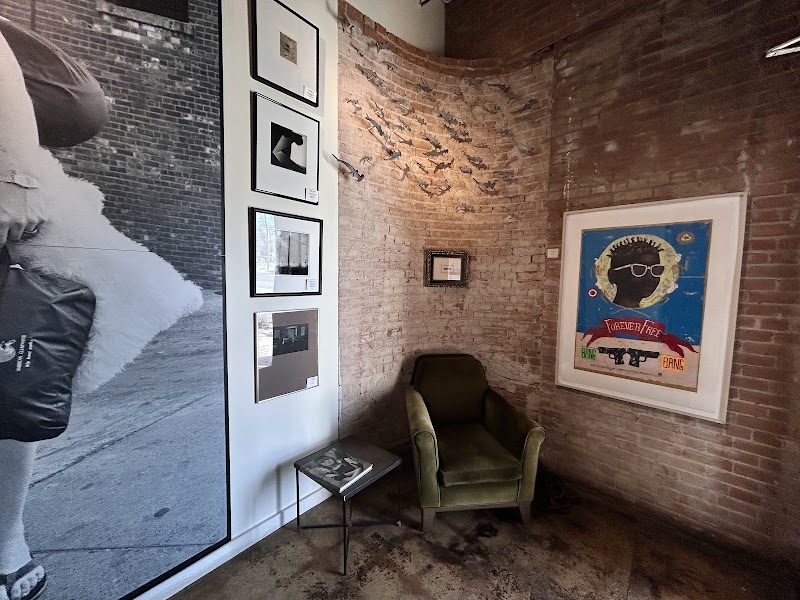
The walls carry local art, photography and small-press publications rather than branded decoration, and there is a performance area used for the neighborhood’s cultural programming. Once a year the shop takes part in the Cedars’ open-studios weekend, when the whole district throws its doors open. That involvement is not incidental — a lot of what makes this a destination rather than a supplier is that it behaves like a member of an arts neighborhood, not like a coffee outlet that happens to be located in one.
What goes with the coffee
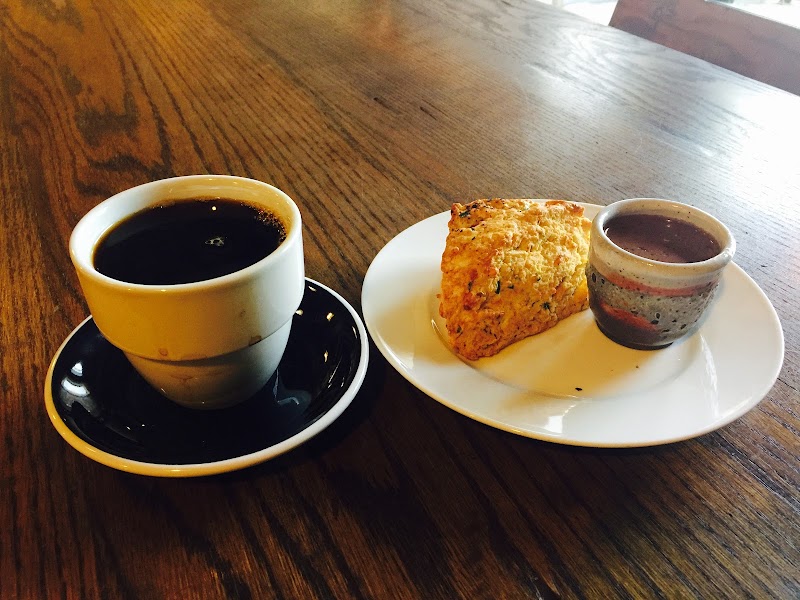
Very little, and honestly so. Food is not part of the identity here: the studio’s public face is entirely about roasting and brewing, and it makes no claims about a kitchen or a bakery program. Anything edible on the counter should be treated as a convenience rather than as a reason to come, and anyone who wants a proper breakfast should eat first and come here afterward for the coffee.
That is a legitimate way to run a roastery — the trade-off is deliberate. A room with no kitchen, no syrup station and no blend has removed almost every hiding place; what is left is the coffee, which is exactly the bet the business has made from the beginning.
When to come
The single most useful planning fact is that this is a roastery whose café keeps a short daily window and finishes early in the day. It is not an evening destination and it is not somewhere to drift into after dinner; if you are used to coffee shops that stay open until late, adjust your expectations before you set out, and check the current schedule rather than assuming.
Within that window, the pattern is simple. Earlier is busier and is when regulars and neighborhood workers pass through; the tail of the day is quieter and better for sitting with a filter coffee and asking questions. Weekends bring the arts crowd, and during the district’s annual open-studios weekend the entire neighborhood — this shop very much included — turns into an event.
Getting there
The Cedars, immediately south of downtown Dallas: an old industrial district of brick warehouses and converted lofts that has become the city’s most concentrated pocket of studios and small creative businesses. Downtown’s towers are visible from the sidewalk, but the atmosphere changes completely once you are here — wider streets, lower buildings, far fewer people.
Most people drive, because this is Dallas and that is what people do; parking in the district is straightforward in a way that downtown parking is not. The better option, if it suits you, is the light rail: the Cedars has its own DART station a short walk away, which makes the roastery one of the more easily reachable specialty coffee stops in the city for anyone without a car. Cycling in from downtown is also realistic, given the distance is small and the neighborhood is flat.
Good to know
The honest limitations. The day is short, so the shop is easy to miss entirely if you plan badly. There is no food program to speak of. There is no blend, which means the espresso is a moving target by design and the flavor you loved last month may not be there this month. There are no syrups, so anyone whose order involves flavoring will need a different café. And the space is small — pleasant, but not somewhere to install yourself for six hours with a laptop.
What is genuinely excellent: this is one of the few places in Dallas where the person who roasted your coffee is in the building; the sourcing is more adventurous than the city’s size would predict; the beans are as fresh as it is physically possible to buy them; the patio is a real asset; and the shop’s involvement in its neighborhood’s art scene gives it a texture that no chain can manufacture. The typo on the sign is a good emblem for all of it — this is a business that would rather keep something honest and slightly odd than sand it down into something smooth.
Questions and answers
Why “Rooster” and not “Roaster”?
Because the word came back misspelled on the first run of shirts and cards, and the founder decided to keep it. “Full city” is a real roasting term for a medium roast taken just to the edge, which is the house style.
Do they roast on site?
Yes. It is a roasting studio first and a café second, and the roaster sits in the same room where the coffee is served. Every batch is profiled by hand rather than left to the machine’s automation.
Is there a house blend?
No, deliberately. Everything is single origin, which means what is on the bar changes as the coffees change — part of the point, and worth asking about when you order.
What origins do they buy?
Latin American coffees such as Mexico, Guatemala and Panama are regulars, and the shop has also worked with genuinely unusual origins including Yemen — scarce and difficult coffee that very few roasters of this size attempt.
Can I get a flavored latte?
No. The drinks list is short and purist by policy — espresso and milk drinks, hand-brewed filter, cold brew, and nothing with syrup. That is a decision, not an oversight.
Is there food?
Not really. Food is not part of what this place does or advertises; come for the coffee and eat elsewhere.
Can I work here with a laptop?
For a focused hour, yes — there is proper seating and a patio. But the café keeps a short day and publishes nothing about Wi-Fi or outlets, so it is not a place to plan a full working day around.
Can I buy beans to take home?
Yes, and it is one of the best reasons to come: coffee bought where it was roasted, with someone on hand who can tell you exactly when it came off the machine.
How do I get there without a car?
The Cedars has its own DART light rail station within walking distance, which makes this an unusually accessible specialty roastery by Dallas standards. Cycling from downtown is also easy.
Is it just a coffee shop, or does anything else happen there?
There is a performance area, and the studio hosts comedy nights, pop-ups and cultural events, and takes part in the neighborhood’s annual open-studios weekend. Check what is scheduled before you go.
Opening hours
| Day | Hours |
|---|---|
| Monday | 08:00–14:00 |
| Tuesday | 08:00–14:00 |
| Wednesday | 08:00–14:00 |
| Thursday | 08:00–14:00 |
| Friday | 08:00–14:00 |
| Saturday | 08:00–14:00 |
| Sunday | 08:00–14:00 |
Photos
Visitor reviews
Reviews last updated: 2026-08-10 17:39:29
Data is refreshed monthly. Sources: dallaska.com and editorial picks based on reviews.
Чудова кава та ще краще обслуговування! Власник був неймовірно люб'язним та гостинним. Він навіть приготував мені еспресо, використовуючи техніку аерації, що зробило його неймовірно м'яким та подарувало мені унікальні вр…
Це, мабуть, найкраща кава, яку ми куштували з часів перебування в США. Вони ретельно підходять до приготування, витрачають час, щоб кожен елемент був ідеальним. Абсолютно смачна, міцна та насичена смаком. Обов'язково від…
Раз на місяць я їжджу до цієї кав'ярні 40 хвилин — просто щоб випити чашку кави та купити два пакетики кавових зерен. Я переїхав сюди з Сіетла, і серед місць поблизу Далласа кавові зерна тут найкращі. Аромат, смак і зага…
Second time visiting. Enjoyed their Cortado too much last time and it was a pleasant surprise! So I had to come back for their latte. My day was set after visiting here. Lovely people, easy going atmosphere, plenty for s…
Смачна кава та жвава атмосфера для бранчу. Кава постійно приносилася, і вона була свіжою на смак, саме те, що хочеться на початку дня.
Єдиним недоліком була велика кількість політичних меседжів у цьому місці. Це здавало…